
Seized Rollers in Cold Snaps
Cold mornings stiffen old grease and make a marginal roller finally seize, usually on the first hard cold morning of the season. It is the single biggest reason the phone starts ringing when temperatures drop.
Local garage door service · Conyers, GA
Garage door repair and installation for Conyers, GA homes, with honest upfront guidance on what your door needs before a truck ever arrives.
Garage door services
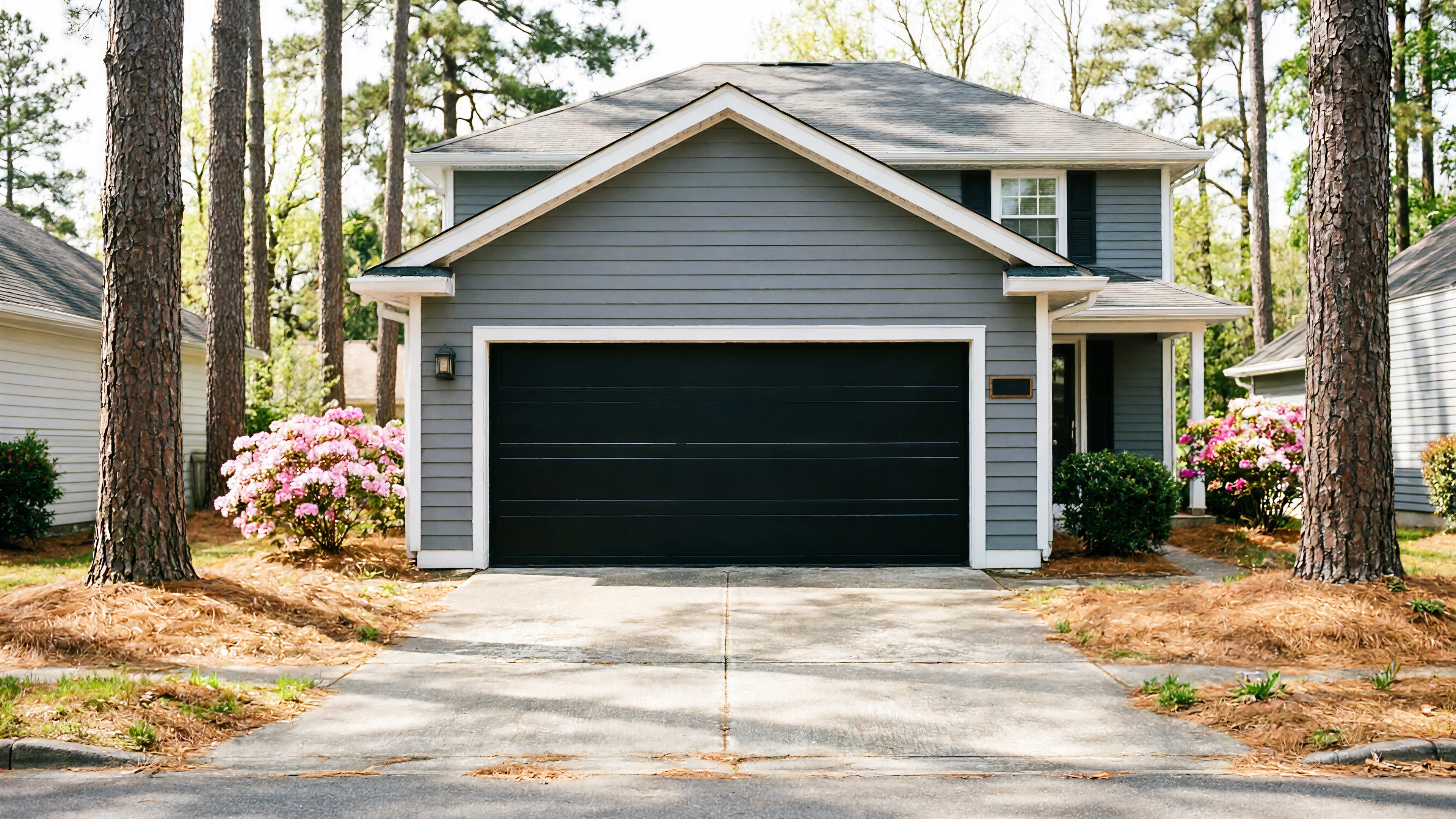
From cable repair and off-track resets to opener installation, panel replacement, roller replacement, new door installation, and general garage door service, the lineup is built around Conyers's 1960s-70s housing stock and the cold-moderate winters that wear its hardware out.


Common Conyers garage door problems
Cold-moderate winters here do a specific kind of damage: they do not snap springs outright as much as they stiffen old lubricant and make a marginal roller finally seize, usually on the first hard cold morning of the season. That is when call volume jumps - not from one storm, but from temperature swings working on hardware that is already fifty years old in a lot of these houses. Beyond that, the most common calls are a broken torsion spring on a double-wide door, a cable frayed through on one side dragging the door crooked, and openers that still run but will not reverse correctly - usually a safety sensor knocked out of alignment, not a dead unit. We see fewer full-panel replacements than you would think, because most damage is localized enough to fix one section instead of the whole door.
Cold mornings stiffen old grease and make a marginal roller finally seize, usually on the first hard cold morning of the season. It is the single biggest reason the phone starts ringing when temperatures drop.
A broken torsion spring on a double-wide door is one of the most common calls we run. The door will not open safely once the spring lets go, so those jobs get priority over cosmetic work.
A lift cable that has frayed through on one side drags the door crooked and throws off the whole balance. It is common in the older stock and usually noticed when the door sits unevenly.
Plenty of openers still run but will not reverse correctly. Nine times out of ten it is a safety sensor knocked out of alignment rather than a dead motor, and a check often sorts it out.
We see fewer full-panel replacements than most people expect. A section clipped backing out is usually localized enough to replace one panel instead of condemning the whole door.
Clear repair guidance
You are paying for the part, the labor, and the trip - not a diagnostic fee disguised as a tune-up. A household here earns a median of $70,101, and most jobs we see are not luxury upgrades: they are a spring, a set of rollers, or a section that got clipped backing out. We price those as what they are.
Where it gets expensive is parts that do not exist anymore. Houses built in the 1960s and 70s sometimes have one-piece doors or odd-width openings that nobody stocks on a shelf, which means a wait on special order instead of a same-week install. We will tell you that number before you commit, not after the deposit.
Honest limitation: if your opener is original to a house built before the 1970s, we may not be able to match it exactly. Sometimes the right call is a new opener on existing track rather than hunting a part that has been discontinued for twenty years, and we will say that plainly instead of charging you to chase it.
The same logic runs through everything we quote. A torsion spring sized for a 1970s door is a specific, findable thing, but the bracket mounting it might not match what a big-box replacement kit assumes, and that is the kind of detail that changes the final number.
Local housing matters

The oldest houses we work on date to 1938 and the newest to 2012, but the median build year lands at 1976, and that number tells you most of what you need to know about the doors behind it. A house built in 1976 almost never still has its original door, but a lot of them still have the original track and header framing, which means replacement doors sometimes get forced into openings they were not quite cut for.
Across the service area there are roughly 40,195 households and about 18,718 owner-occupied houses, and the 1960s-70s stock is the backbone of that number, spread across all seventeen named areas we cover rather than clustered in one neighborhood.
That matters for parts: a torsion spring sized for a 1970s door is a specific, findable thing, but the bracket mounting it might not match what a big-box replacement kit assumes. The giveaway on an older build is usually the opening itself, which rarely lines up with a modern catalog size.
So we size to the opening in front of us, not to a catalog number. It is the only way to fit a replacement door cleanly into framing that was laid out fifty years ago.
Cold-weather garage door wear
Conyers sits in a cold-moderate winter band, so the damage is less about a single freeze and more about repeated temperature swings. Cold mornings stiffen old grease on rollers and tracks, and that extra drag exposes marginal hardware that has been coasting along fine for years - usually all at once, on the first hard cold morning.
Cold mornings stiffen the old grease on rollers and tracks, adding drag the whole system has to fight. On fifty-year-old hardware that drag is often the difference between a door that works and one that will not budge.
A roller that was marginal all summer finally seizes on the first hard cold morning of the season. It is the most predictable cold-weather failure we see, and it rarely gives much warning before it happens.
Extra cold drag can trip an opener's force sensors, and the unit reads the hardware resistance as an obstruction. It usually is not the motor failing - it is the door getting harder to move than the opener expects.
Cold-weather drag and the extra force the opener applies can throw a safety sensor out of alignment. A lube and alignment check often fixes what looks at first like a dead or failing opener.
Call volume jumps with the temperature swings, not with any one storm. The cold simply finds the hardware that was already near the end of its life across a lot of these older houses at the same time.
What to expect
You tell us what the door is doing, we tell you what it is probably going to take, and we book a truck. Because most of Conyers went up between 1938 and 2012 with the bulk in the 1960s-70s wave, we usually have a good guess at the hardware behind your wall before we ever pull into the driveway.
You tell us what the door is doing or not doing, we tell you what it is probably going to take, and we book a truck for the visit.
Most of Conyers went up between 1938 and 2012, with the bulk concentrated in the 1960s-70s wave, so when you say the spring let go or it is off the track, we already have a good guess at the hardware behind your wall before we pull in.
We will tell you up front whether this sounds like a $150 fix or a door that has earned retirement. If it is the second one, we say so before we show up, not after we have opened the panel.
We run one service area, not a franchise territory with a call center routing jobs to whoever is closest. The person who answers the phone is the person who knows the truck schedule.
We Don't Quote Blind Over the Phone
Beyond a basic service call we will not quote sight unseen - a torsion spring job on an original 1970s header is a different animal from a cable snap on a door that got replaced ten years ago.
Repair or replace?
A broken spring, cable, roller, or opener part does not automatically mean the whole door needs replacing. We are not going to sell you a new door when a roller set and a spring adjustment solve the actual problem - but we will tell you plainly when a door has genuinely earned retirement.
We are not going to sell you a new door when a $40 roller set and a spring adjustment solve the actual problem. If the fix is small, we tell you it is small instead of talking it up into a replacement.
Most panel damage is localized enough to replace a single section rather than the whole door. A section clipped backing out rarely means the entire door is finished.
When an opener original to a pre-1970s house cannot be matched, a new opener on the existing track usually beats chasing a part that has been discontinued for twenty years.
When parts are genuinely scarce or the door is past its service life, we say so before we show up rather than running up a repair bill on hardware that nobody stocks anymore.
1930s - 2010s garage door systems
With houses dating anywhere from 1938 to 2012 and the median landing at 1976, the doors, tracks, and openings we work on rarely match a single catalog standard. The 1960s-70s stock is the backbone of the area, and its quirks are what make a generic install go wrong.
The bulk of the local stock dates to the 1960s-70s build-out, and it is spread across all seventeen named areas we cover, not clustered in one neighborhood. That pattern holds across most of the towns around Conyers too.
A house built in 1976 almost never still has its original door, but a lot of them keep the original track and header framing. The door has moved on while the hardware around it has not.
Because that original framing stays put, replacement doors sometimes get forced into openings they were not quite cut for. Making one fit cleanly is a measuring job, not a catalog lookup.
Some of the 1960s-70s houses here have one-piece doors or odd-width openings that nobody stocks on a shelf. Those mean a special-order wait rather than a same-week swap.
A torsion spring sized for a 1970s door is a specific, findable thing, but the bracket mounting it might not match what a big-box replacement kit assumes, which adds time and parts.
Built around Conyers garage doors
With original track framing often outliving the door, openers swapped at different times, and one-piece or odd-width openings mixed in, the system on your wall rarely matches a catalog kit. So we check what is actually installed before matching or ordering any parts.
We size to the opening in front of us, not to a catalog number. Framing laid out fifty years ago rarely lines up with a modern replacement kit, so the measurement has to come first.
Spring size and type, cable condition, roller type, track alignment, and opener hardware are checked directly before anything is ordered, because a door this age often mixes parts from different eras.
A 1976 door has almost always been replaced at least once, often running on original track and header framing that newer parts do not bolt onto cleanly. We plan the repair around that reality.
When a part is special-order or discontinued, we give you the cost and timeline up front rather than surprising you with it mid-job. Scarce hardware is a scheduling fact, not a hidden charge.
Service areas
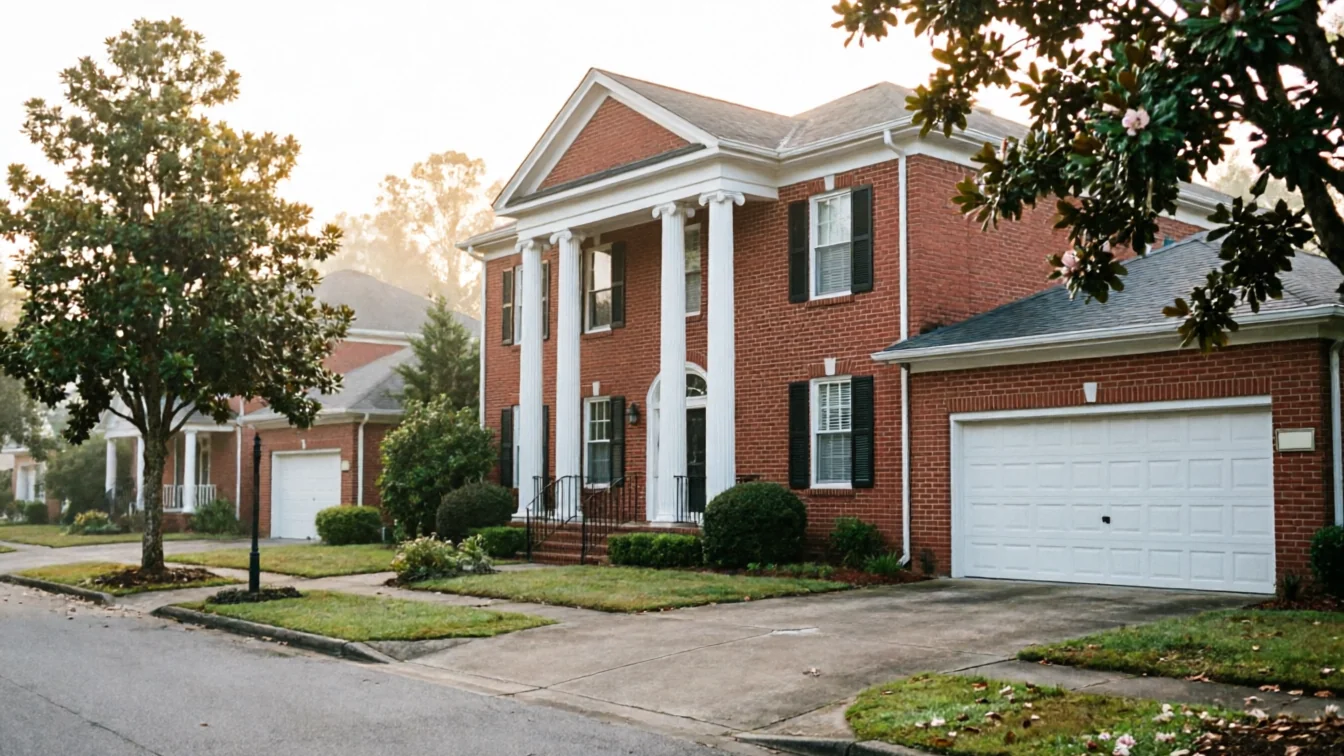
Conyers is the base, and from here the truck covers a ring of towns at pretty tight distances. Oxford and Porterdale sit about 7-8 miles out, Lithonia is close at 8, and Walnut Grove runs 10. Past that it is Stone Mountain, Between, Mountain Park, Social Circle, and Pine Lake, all around 15-16 miles, with Grayson close behind. Farther out we still get to Panthersville, Belvedere Park, Avondale Estates, Monroe, Clarkston, Scottdale, and Gresham Park, all in the 17-19 mile range. That is seventeen named areas total beyond Conyers proper, and the housing stock across most of them tracks the same pattern as Conyers itself - a lot of it dating to that same 1960s-70s build-out.
If you are not sure whether you are in range, ask when you call. Distance is not usually the issue; scheduling around it is, and the closer you are, the easier same-week timing becomes.
From our Conyers, GA base we run trucks across the surrounding towns rather than keeping a storefront in each one. These are the areas we serve most often - pick yours to see the local detail.
Questions
Yes. We regularly get out to Oxford, Porterdale, and Lithonia at 7-8 miles, and farther towns like Monroe, Stone Mountain, and Clarkston within our normal 15-19 mile range. Call and give us your town - if it is on our list of seventeen, we can likely get there this week.
In this climate band, cold mornings stiffen old grease on rollers and tracks, and that extra drag can trip an opener's force sensors or throw off sensor alignment. It usually is not the motor failing - it is hardware resistance the opener reads as an obstruction. A lube and alignment check often fixes it.
Sometimes, sometimes not. A lot of the 1960s-70s stock here has openings or one-piece doors that are not standard sizes anymore, so exact matches can mean a special-order wait. We will always tell you that cost and timeline up front rather than surprise you with it mid-job.
No - torsion springs are under heavy tension and have hurt people who tried to swap them without the right bars and clamps. It is a quick job for someone who does it daily, usually well under $200 in parts and labor, but it is not a weekend project we would recommend tackling alone.
Ready when you are
Tell us what the door is doing and we'll help you pin down the problem across Conyers.